



Ads are delivered on phones, desktops, feeds, stories, and video players. Various screen shapes are needed for different placements. Every shape contributes to clarity and visual impact. Vertical and widescreen are different formats for different viewings and creative layouts. Pippit is a tool that allows you to make, edit, adapt, and export video ads in an efficient manner. You can create versions with AI tools for various ad placements. Every version can be used in a different placement and not compromise the campaign.
Why Create Both Vertical and Widescreen Ads?
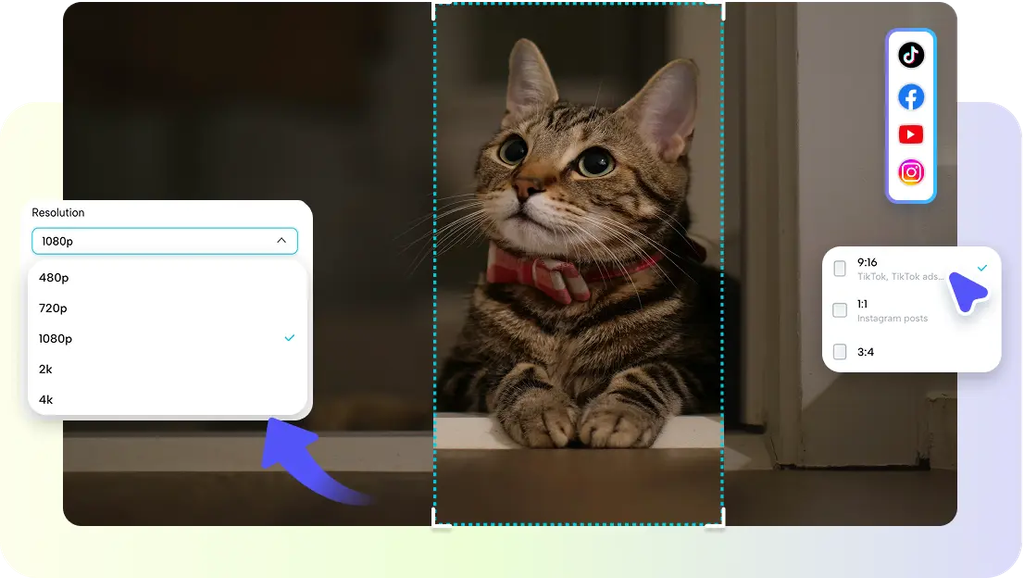
Videos are vertical 9:16 formats that are ideal for viewing on smartphones. These are particularly effective for TikTok, Instagram Reels, and YouTube Shorts. 16:9 wide videos are suitable for landscape formats, such as many in-stream and desktop formats. Each ratio alters the placement of products, text, logos, and movement within the space available. Separate versions ensure that the composition, readability, and visual emphasis are not lost when placed. Select the destination first to minimize restructuring and avoid unnecessary editing later.
Plan Your Ad Around the Destination and Message
Before selecting an aspect ratio, it’s important to identify the platform and placement. Identify one main benefit of a product and link it to a definite viewer response. A related AI movie workflow can support visual planning. A good ad can convey the concept in a few seconds, without distractions. Ensure that text, products, logos, and calls to action stay within the readable safe areas. Gather product photos, videos, logos, and supporting materials prior to production. Different arrangements might be needed for vertical and widescreen. With Pippit, you can plan these creative decisions before you get down to the final ad. Early planning ensures consistency and enables each format to perform in its placement.
Build Different Ad Formats with Pippit’s AI Video Tools
Pippit can convert product information and provided visuals into promotional video content. It has AI capabilities that can help you with scripts, transitions, music, effects, captions, and more. Product details, desired visuals, camera angles, messaging, and creative requirements can be described. Pippit can then use those inputs and the reference media to create a first video. Consistent campaign messaging can be achieved in a story studio workflow that can support broader creative development. There are also templates available that will help keep ads recognizable across multiple ads while maintaining recognizable branding. AI-driven production streamlines repetitive editing tasks while still retaining the creative review. Content can be edited after it is generated and before it is used for ad placements.

Steps to Build Vertical and Widescreen Ads Simply with Ad Maker
Step 1: Set up Ad Maker for flexible formats
- Sign up for Ad Maker using Google, TikTok, or Facebook account info.
- Navigate to the “More” tab on the left vertical menu bar and click it to access “Video generator”.
- Select an AI model, such as Dreamina Seedance 1.0, Dreamina Seedance 2.0, Dreamina Seedance 2.0 Fast, Dreamina Seedance 2.0 Mini, or Dreamina Seedance 2.5 for your video generation.
- Enter a detailed text prompt that explains how you want the ad to look. Add product details, camera angles, text, and other creative directions.
- Choose the video length, language, subtitles, and aspect ratio. Select the format that fits your ad, such as vertical or widescreen.
- Click “+” to upload reference images or videos from your device, phone, Dropbox, or a link. You can also select assets if you don’t have reference media.
- Once everything is added, click “Generate”.
Step 2: Generate ads in your chosen format
- After clicking “Generate”, Ad Maker’s AI video generator automatically creates a video ad using your prompt and reference media.
- The AI manages transitions, pacing, captions, avatars, voice, lyrics, and visual enhancements.
- You will receive a video ad draft in the selected aspect ratio to review.
Step 3: Refine and export your ad
- Click the “Download” tab in the top-right corner to save the draft as it is. If you want another result, click “Regenerate”.
- To adjust the generated ad, click “Edit more” under the video to open the Ad Maker editing interface.
- Customize captions, text, size, color, alignment, filters, and effects. Make changes that suit the selected format.
- Add background music, remove backgrounds, and fine-tune the visuals as needed.
- When the ad is ready, click “Export” in the top right corner.
- Select “Publish” to post directly to TikTok, Instagram, or Facebook. Or click “Download” to save it with your preferred format, resolution, frame rate, and quality.
Adapt One Advertising Concept for Two Screen Shapes
Vertical compositions tend to focus on products and information that are stacked on top of each other. They also focus on the good focal points. Widescreen shots allow for more horizontal room for multiple elements and wider scenes. Awkward spacing, cropping, or positioning of information can result from stretching one version or the other. Pippit’s ad maker can accommodate various compositions without compromising the overall message of the campaign. For each ratio, reorder the product visuals, headlines, logos, captions, and calls to action. Maintain continuity of brand identity using typography, messaging, imagery, and visual treatments that are well known. The target is to adjust composition, not necessarily to make it the same on each screen.
Fine-Tune Visual Elements Before Export
Carefully read through each of the versions before exporting the final ad. Position, size, color, align, transition, filter, and effect text as needed. Look for captions at realistic screen sizes, as they may not be as easy to read on mobile devices. Ensure product information is always visible and that attention grabbers have sufficient space. Background music should be used to help the pacing, and effects should enhance and not detract from the messaging. Pippit’s editing interface offers controls for the final visual refinements after generation. A thorough examination also reveals any awkward timing, overcrowded shots, or inconsistent branding. Correct before export to give each version a sense that it’s designed for its purpose.
Export Ads for Different Advertising Placements
Once final edits are made, use the export controls to prepare each advertisement. Choose appropriate format, resolution, frame rates, and quality for the intended placement. Pippit also offers publishing capabilities for platforms like TikTok, Instagram, and Facebook. When the connected platform and workflow support it, direct publishing can simplify the distribution. All files that are downloaded should be reviewed last before being included in an advertising campaign. Verify dimensions, playback quality, captions, branding, and call to action for each version exported. It is important to match the export specifications with placement demands to avoid unnecessary quality and cropping issues.
Common Mistakes When Creating Multi-Format Ads
When all of the screens are treated the same, multi-format campaigns can lose their effectiveness. Here are some issues to look out for before posting:
- When forcing one composition into all the ratios, it can result in awkward spacing or cropping.
- Important text can be placed too close to the edges and may be shown or hidden by interface elements or by accident.
- Too much text can make it hard to read, particularly on mobile devices.
- Changing the size of the page without verifying captions, logos, products, and calls to action can obscure necessary information.
- Unsuitable files can be created when exporting without confirmation of resolution, frame rate, quality, and destination format.
Conclusion
There are different ads for vertical and widescreen, as well as different viewing habits and creative compositions. The placement, the message, and the audience context are the first things in multi-format advertising that are essential to make it effective. Rather than trying to extend a single design, make dedicated designs for each screen shape. Pippit’s AI generation and editing capabilities can streamline production and adaptation. A consistent message can be maintained whilst layouts are varied for each destination. With a thoughtful format strategy, each ad message will be clear and effective in today’s digital landscape.