







One of the highly searched payroll and employment related terms among job seekers and salaried employee is gross salary meaning. Gross Salary Meaning : Gross salary is more like a concept than real money, and whether it is your first job offer or you are just trying to make sense of your monthly salary slip, knowledge of gross salary meaning helps in knowing how much do you actually take home before any deductions.
Most employees confuse gross salary with CTC and net Salary. All three terms differ, however and are a crucial part of the technical salary calculations. This comprehensive guide explains the meaning of gross salary, its components, how to calculate it (formula along with examples), differences with net salary and CTC, tax implication and FAQs.
What is Gross Salary Meaning?
The gross salary meaning refers to the total salary earned by an employee before any deductions such as income tax, Provident Fund (PF), Professional Tax (PT), Employee State Insurance (ESI), or other deductions.
Simply put, gross salary is the amount your employer agrees to pay you after adding all salary components like:
- Basic Salary
- House Rent Allowance (HRA)
- Dearness Allowance (DA)
- Special Allowance
- Bonus
- Overtime
- Performance Incentives
- Medical Allowance
- Travel Allowance
- Other taxable allowances
After subtracting mandatory deductions from the gross salary, you receive your net salary, also called your take-home salary.
Gross Salary at a Glance
| Particular | Details |
| Meaning | Total earnings before deductions |
| Includes | Basic salary, HRA, DA, allowances, bonuses, incentives |
| Excludes | Employer PF contribution and gratuity (usually) |
| Deductions | PF, Income Tax, Professional Tax, ESI, etc. |
| Result After Deductions | Net Salary |
| Used For | Salary slips, loans, taxation, employment verification |
Components of Gross Salary
Understanding the gross salary meaning becomes easier when you know its individual components.
| Component | Description |
| Basic Salary | Fixed salary paid every month |
| House Rent Allowance (HRA) | Helps cover rental expenses |
| Dearness Allowance (DA) | Paid mainly in government jobs |
| Special Allowance | Additional taxable allowance |
| Medical Allowance | Medical-related reimbursement or allowance |
| Conveyance Allowance | Travel expenses |
| Bonus | Performance-based payment |
| Incentives | Extra earnings based on targets |
| Overtime Pay | Payment for additional working hours |
These collectively form the gross salary before deductions.
Gross Salary Formula
The formula is :
Gross Salary = Basic Salary + HRA + DA + Special Allowances + Bonus + Incentives + Other Earnings
After deductions,
Net Salary = Gross Salary − Total Deductions
Example of Gross Salary Calculation
Suppose an employee receives the following monthly salary:
| Salary Component | Amount |
| Basic Salary | $2,000 |
| HRA | $600 |
| Special Allowance | $400 |
| Medical Allowance | $100 |
| Bonus | $200 |
| Travel Allowance | $100 |
Total Gross Salary
$2,000 + $600 + $400 + $100 + $200 + $100 = $3,400
Now assume deductions are:
| Deduction | Amount |
| PF | $180 |
| Income Tax | $220 |
| Professional Tax | $20 |
Total deductions = $420
Net Salary = $3,400 − $420 = $2,980
Difference Between Gross Salary and Net Salary
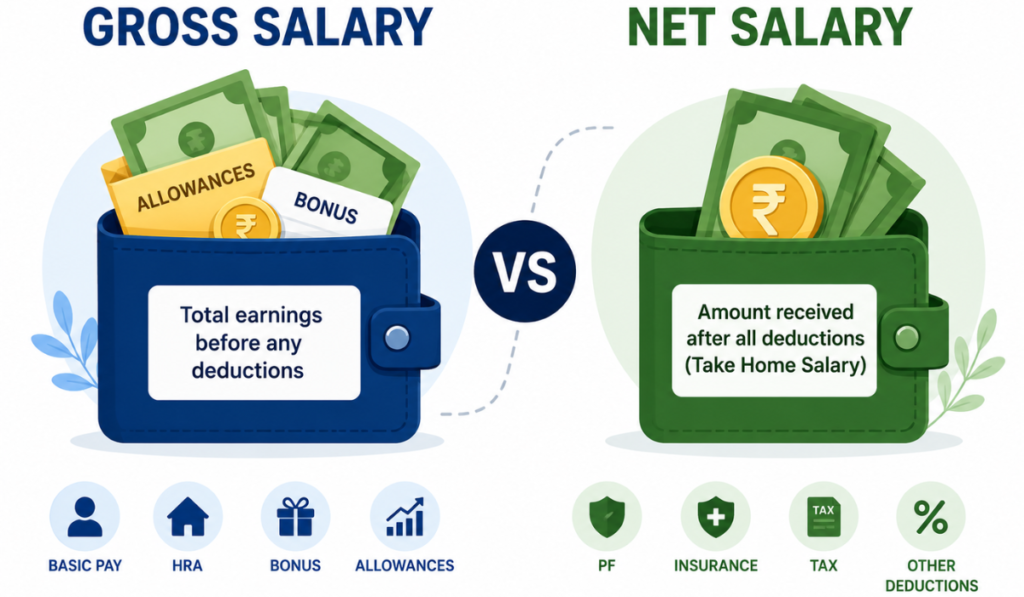
One of the biggest reasons people search for the gross salary meaning is to understand how it differs from net salary.
| Gross Salary | Net Salary |
| Salary before deductions | Salary after deductions |
| Higher amount | Lower amount |
| Includes allowances | Excludes deductions |
| Used for payroll | Actual salary received |
| Not credited to bank | Credited to employee account |
Gross Salary vs CTC
Many employees assume gross salary and CTC are the same, but they are different.
| Gross Salary | CTC |
| Employee earnings before deductions | Total cost incurred by employer |
| Does not include employer PF | Includes employer PF |
| Lower than CTC | Usually highest salary figure |
| Appears in salary slip | Mentioned in offer letter |
What is Included in Gross Salary?
The gross salary meaning includes almost every earning component received by the employee before deductions.
Common inclusions are:
- Basic Pay
- HRA
- Dearness Allowance
- Performance Bonus
- Incentives
- Overtime
- Special Allowance
- Shift Allowance
- Medical Allowance
- Travel Allowance
- Leave Encashment (if applicable)
What is Not Included in Gross Salary?
Some components generally do not form part of gross salary.
| Not Included | Reason |
| Employer PF Contribution | Employer benefit |
| Gratuity | Long-term retirement benefit |
| Reimbursements | Paid against bills |
| Insurance Premium Paid by Employer | Employer expense |
| ESOP Benefits | Separate compensation |
Why Gross Salary is Important?
Understanding the gross salary meaning helps employees make better financial decisions.
Major benefits include:
1. Better Salary Negotiation
Knowing gross salary helps compare job offers accurately.
2. Loan Approval
Banks often evaluate gross salary before approving loans.
3. Tax Planning
Income tax calculations begin from gross earnings.
4. Budget Planning
Employees can estimate their actual take-home salary.
5. Salary Comparison
Gross salary provides a standardized way to compare compensation across employers.
Gross Salary in Salary Slip
A typical salary slip looks like this.
| Earnings | Amount |
| Basic Salary | $2,000 |
| HRA | $600 |
| Special Allowance | $400 |
| Medical Allowance | $100 |
| Bonus | $200 |
| Gross Salary | $3,300 |
Deductions
| Deduction | Amount |
| PF | $180 |
| Income Tax | $220 |
| Professional Tax | $20 |
| Total Deductions | $420 |
Net Salary
$2,880
Is Gross Salary Taxable?
Yes.
The gross salary meaning includes taxable income, but your actual tax liability depends on:
- Income tax slab
- Applicable exemptions
- Deductions under tax laws
- Chosen tax regime
- Eligible rebates
Not every component of gross salary is taxed equally. Some allowances may qualify for exemptions depending on applicable tax rules.
Gross Salary for Freshers
Freshers should always understand the gross salary meaning before accepting an offer letter.
Things to check include:
- Monthly gross salary
- Annual gross salary
- Monthly deductions
- Employer PF contribution
- Bonus structure
- Incentives
- Variable pay
- CTC breakup
This helps estimate the actual monthly take-home salary.
How to Calculate Gross Salary from Net Salary
If you know your net salary, you can estimate gross salary by adding back deductions.
Gross Salary = Net Salary + PF + Income Tax + Professional Tax + Other Deductions
Example:
Net Salary = $2,980
PF = $180
Income Tax = $220
Professional Tax = $20
Gross Salary = $2,980 + $180 + $220 + $20 = $3,400
Common Misconceptions About Gross Salary
| Myth | Reality |
| Gross salary equals take-home salary | False |
| Gross salary equals CTC | False |
| Gross salary is tax-free | False |
| Gross salary excludes allowances | False |
| Net salary is always equal every month | Not always, due to bonuses or variable deductions |
Tips for Employees
Before accepting any job offer:
- Check the complete salary breakup.
- Understand the difference between CTC and gross salary.
- Calculate your expected take-home salary.
- Review deductions like PF, ESI, and taxes.
- Ask HR about variable pay and bonuses.
- Compare gross salary across multiple offers.
Conclusion
All salaried employees should know gross salary meaning. Gross salary is the total amount you earn before any deductions, which includes your basic pay plus all allowances and bonuses & incentives. It is distinct and different from CTC and net salary so it very important to go through your salary structure before accepting the offer. If you learn about how gross salary is calculated and the deductions that will apply, you can plan your finances better, compare job offers with more confidence and estimate what amount of money should actually end up in the bank each month.
Frequently Asked Questions
1. What is the gross salary meaning?
Gross salary means the total salary earned before deductions such as income tax, PF, Professional Tax, and ESI.
2. Is gross salary the same as take-home salary?
No. Gross salary is before deductions, while take-home (net) salary is the amount credited after deductions.
3. Is gross salary higher than net salary?
Yes. Gross salary is always higher because deductions are made before the employee receives the net salary.
4. Is gross salary the same as CTC?
No. CTC includes the employer’s total cost, while gross salary is the employee’s earnings before deductions.
5. How do I calculate gross salary?
Add the basic salary, allowances, bonuses, incentives, and other earnings before deductions.
Read more: Army Clerk Salary / Forest Guard Salary / Postal Assistant Salary