
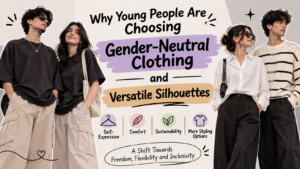




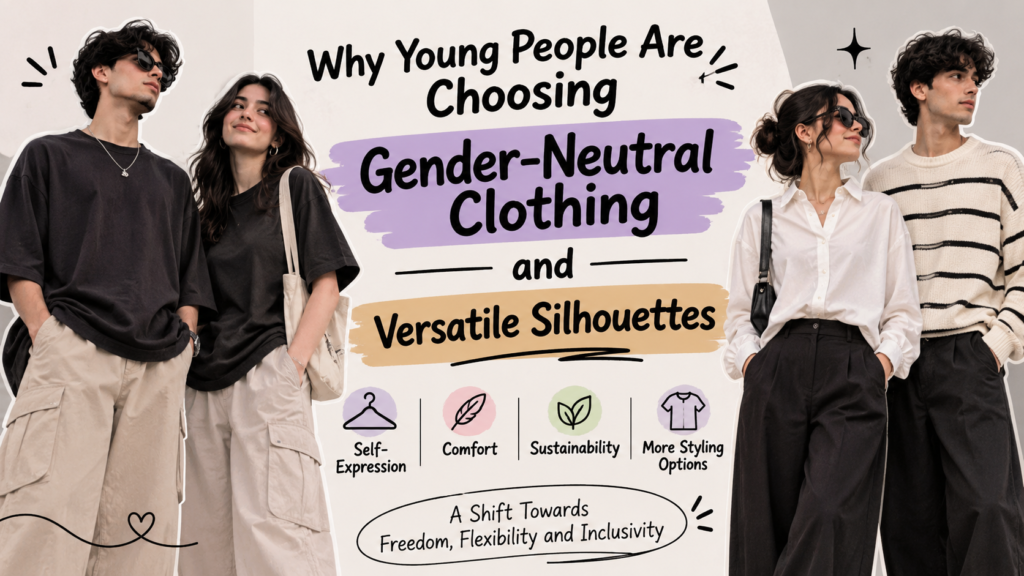
Fashion has traditionally divided clothing into men’s and women’s categories, with separate expectations concerning cuts, colors, and styling. However, younger consumers are increasingly questioning these distinctions. Gender-neutral clothing offers an alternative through garments designed without strict gender classifications. Oversized shirts, straight-leg trousers, loose jackets, and basic knitwear have become common elements of this approach. Their appeal reflects changing attitudes toward personal expression, comfort, shopping habits, and the relationship between clothing and identity.
Digital platforms influence how young people discover fashion and entertainment. Someone exploring online leisure might encounter this website, which features chance-based casino entertainment involving financial risks. Fashion consumption follows different motivations, including practicality, self-expression, and cultural influence. Understanding these factors helps explain why gender-neutral clothing attracts attention beyond traditional fashion categories.
What Is Gender-Neutral Clothing?
Gender-neutral clothing refers to garments designed or marketed without assigning them exclusively to men or women.
Common examples include T-shirts, sweatshirts, jackets, trousers, and knitwear with adaptable cuts.
However, gender neutrality does not require every garment to have an oversized fit.
Clothing can use different proportions while avoiding assumptions about who should wear it.
The central idea is that consumers select garments according to fit, function, and personal preference rather than gender labels.
Why Traditional Fashion Categories Are Changing
Clothing categories developed through cultural conventions, manufacturing practices, and retail organization.
These systems helped companies standardize sizing and organize collections.
However, they also created expectations about which garments particular consumers should purchase.
Younger shoppers increasingly encounter fashion inspiration that crosses these boundaries.
Someone may prefer trousers from one department and jackets from another.
Gender-neutral collections respond to this behavior by emphasizing garments rather than the gender of the intended customer.
Comfort and Freedom of Movement
Comfort is an important reason consumers choose versatile silhouettes.
Loose trousers, relaxed shirts, and garments with adjustable features can provide greater freedom of movement.
These designs may suit daily activities involving commuting, studying, working, and socializing.
However, oversized clothing is not automatically more comfortable.
Fabric composition, construction, and garment proportions influence how clothing feels.
Consumers benefit from evaluating fit according to body measurements and intended use rather than following a particular silhouette exclusively.
The Influence of Generation Z
Generation Z has grown up with access to diverse fashion references through digital media.
Young consumers can explore different styles without relying entirely on traditional retail recommendations.
This exposure encourages experimentation with clothing combinations and silhouettes.
Some people choose gender-neutral garments as expressions of identity, while others simply prefer the appearance or convenience.
These motivations should not be treated as identical.
Wearing unisex clothing does not necessarily communicate anything about a person’s gender identity or personal beliefs.
Why Oversized Silhouettes Are Popular
Oversized silhouettes have appeared repeatedly throughout fashion history.
Their current popularity reflects influences from streetwear, sports clothing, and casual wardrobes.
Wide trousers, boxy shirts, and loose jackets allow different proportions to be combined within one outfit.
These garments can also accommodate layering across seasons.
However, excessive volume may reduce mobility or create fitting problems.
Balanced proportions and appropriate garment lengths remain important when selecting oversized clothing.
Social Media and Fashion Experimentation
Social media allows users to share outfits that combine clothing from different departments and fashion categories.
Styling videos demonstrate how one garment can work across multiple wardrobes.
This exposure may encourage shoppers to experiment with unfamiliar cuts.
Online communities also provide feedback and inspiration.
However, recommendation algorithms can amplify particular aesthetics, creating pressure to adopt trends.
Consumers should distinguish personal preferences from styles that appear popular primarily because of repeated online exposure.
Versatility and Wardrobe Planning
Gender-neutral clothing often emphasizes garments that can be combined in different ways.
A straight-cut shirt may work with tailored trousers, denim, or casual shorts.
Similarly, a loose jacket can complement several outfit categories.
Versatility may reduce the need to purchase separate garments for every occasion.
However, a garment’s usefulness depends on lifestyle, climate, and existing wardrobe choices.
Buying fewer compatible pieces can be more practical than collecting numerous items marketed as essentials.
Sustainability and Clothing Consumption
Gender-neutral fashion is sometimes associated with sustainability because adaptable garments may be shared, reused, or worn across changing preferences.
However, gender-neutral design does not automatically reduce environmental impact.
Production methods, materials, durability, and purchasing frequency remain important.
A poorly constructed unisex garment may have a shorter lifespan than a durable item from a traditional clothing category.
Consumers interested in reducing waste should prioritize quality, maintenance, and repeated use rather than labels alone.
Challenges With Unisex Sizing
One difficulty in gender-neutral fashion involves creating sizes that accommodate different body proportions.
Traditional sizing systems already vary between manufacturers.
Unisex garments may introduce additional uncertainty because one cut cannot fit every body equally well.
Shoulder width, hip measurements, sleeve length, and garment rise affect comfort.
Detailed measurement charts and multiple fit options can help address these differences.
Gender-neutral design becomes more practical when manufacturers recognize body diversity instead of relying on one standardized silhouette.
How Fashion Retailers Are Adapting
Retailers increasingly experiment with collections organized around garment types, functions, and styles rather than gender.
Some offer shared departments or present the same products on models with different body proportions.
These approaches may simplify shopping for consumers who prefer flexible categories.
However, changing labels alone does not improve garment fit or quality.
Retail strategies must also address measurements, product descriptions, and customer expectations.
Building a Gender-Neutral Wardrobe
A practical starting point involves identifying garments that suit existing clothing and daily activities.
Straight-leg trousers, shirts, knitwear, and jackets can provide foundations for different combinations.
Choose measurements based on fit rather than department labels.
Experiment with layering, proportions, and accessories before purchasing additional pieces.
The objective is to create a wardrobe that supports individual preferences without unnecessary restrictions.
The Future of Gender-Neutral Fashion
Gender-neutral clothing reflects broader changes in how younger consumers approach style and identity.
Its popularity is connected to comfort, versatile design, and greater freedom in selecting garments.
However, traditional fashion categories are unlikely to disappear completely because shoppers have different preferences and fitting requirements.
The most meaningful development is increased choice.
Rather than replacing one set of fashion rules with another, gender-neutral clothing allows consumers to evaluate garments according to comfort, function, and personal expression.
Ultimately, the value of clothing depends on how well it serves the person wearing it, not the category assigned to it.